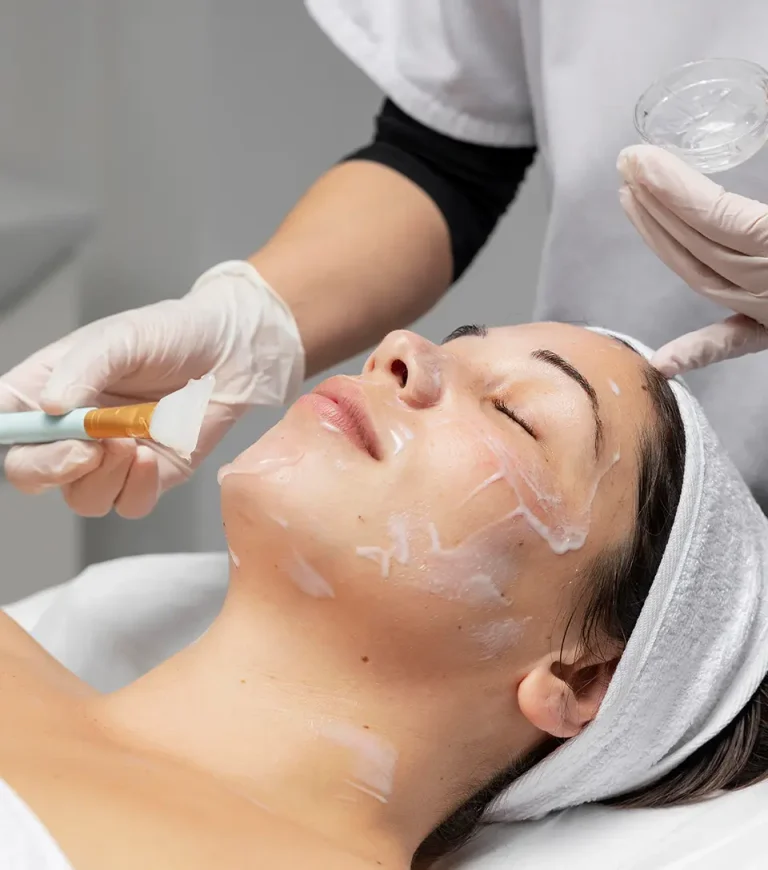
DIY Chemical Peel vs. Professional Treatment: Weighing Risks and Benefits

The desire for smoother, clearer, and more radiant skin often leads individuals to consider chemical peels. These treatments work by applying a chemical solution to the skin, causing controlled exfoliation and revealing fresher skin underneath. While the appeal of a DIY approach for chemical peel treatment is understandable, it’s crucial to weigh the potential benefits against the significant risks involved. Understanding the nuances of different peel strengths and their appropriate application is key to achieving desired results safely.
Key points
- DIY chemical peels use milder acids and carry risks of burns, scarring, and uneven results.
- Professional chemical peels offer a safer, more effective approach due to expert skin analysis and product selection.
- Deeper chemical peels require professional application and post-treatment care.
- Treatments like LED Light Therapy and Custom Facials can complement chemical peels for enhanced skin health.
- Consulting a professional is recommended for significant skin concerns and optimal, safe results.
The Allure of At-Home Chemical Peels
The accessibility of over-the-counter chemical peel kits presents a tempting option for those seeking skin improvements without immediate professional intervention. These kits typically contain milder acids, such as alpha hydroxy acids (AHAs) like glycolic or lactic acid, or lower concentrations of beta hydroxy acids (BHAs) like salicylic acid. Consumers may be drawn to the lower upfront cost and the convenience of performing the treatment in the comfort of their own home. The perceived simplicity of following product instructions can also contribute to the DIY appeal, promising a pathway to reduced acne, diminished fine lines, and improved skin texture.
Risks and Limitations of DIY Chemical Peels
However, the convenience of DIY chemical peel treatments comes with considerable risks. Without professional guidance, it’s challenging to accurately assess one’s skin type and condition, leading to the selection of an inappropriate product strength or formulation. This can result in adverse reactions ranging from excessive redness, peeling, and irritation to more severe issues like chemical burns, scarring, and hyperpigmentation or hypopigmentation. The depth of a chemical peel is critical; deeper peels, which offer more dramatic results for significant concerns like acne scarring or deeper wrinkles, require precise application and post-treatment care that is difficult to replicate at home. Furthermore, at-home kits often lack the advanced ingredients and customizable formulations available in professional settings, potentially limiting the overall effectiveness compared to treatments administered by a trained aesthetician or dermatologist.
The Professional Chemical Peel Advantage
Opting for a professional chemical peel treatment, whether it’s a light, medium, or deep peel, offers a significantly higher level of safety and efficacy. Professionals possess the knowledge to perform a thorough skin analysis, identifying your specific concerns and skin type to select the most appropriate chemical agent and concentration. This tailored approach ensures that the treatment is optimized for your individual needs, whether you are seeking to address sun damage, acne, melasma, or fine lines. Professionals are also trained to manage potential complications during and after the procedure, providing essential post-peel care instructions and products to promote healing and minimize risks. This expertise is invaluable, especially when considering more intensive treatments that can yield more profound skin rejuvenation.
Beyond Peels: Complementary Professional Treatments
While chemical peels are powerful tools, a comprehensive approach to skin health often involves other advanced treatments. Professionals may recommend LED Light Therapy as a complementary service. This non-invasive treatment uses specific wavelengths of light to promote cellular repair, reduce inflammation, and stimulate collagen production, aiding in healing and enhancing overall skin appearance. For personalized skin concerns, Custom Facials can be invaluable. These facials are designed specifically for your skin’s unique needs, incorporating a variety of techniques and products, including targeted serums and masks, to address issues that chemical peels alone might not fully resolve. These treatments, when recommended and administered by experts, can work synergistically with chemical peels for superior, long-lasting results.
Making an Informed Decision
Ultimately, the decision between a DIY chemical peel and a professional treatment hinges on a realistic assessment of your skin’s needs, your tolerance for risk, and your desired outcomes. For minor surface concerns and a gentle exfoliation, a carefully selected at-home product might suffice for some individuals. However, for significant skin issues, deeper rejuvenation, or simply for peace of mind and optimal results, consulting with and undergoing treatment from a qualified professional is the recommended course of action. They can provide not only the chemical peel treatment but also guide you on the best overall skincare regimen, potentially incorporating services like LED Light Therapy or Custom Facials for a truly transformative experience.
See our Chemical Peel Treatment page for how Beyondbeautyscarsdale can help.
Common questions
Is a DIY chemical peel safe?
A DIY chemical peel can be safe for very mild exfoliation if used cautiously, but it carries significant risks of burns, scarring, and uneven results, especially with stronger formulations or improper application. Professional supervision is recommended for most chemical peel treatments.
What are the risks of doing a chemical peel at home?
The risks of at-home chemical peels include chemical burns, permanent scarring, hyperpigmentation or hypopigmentation, infection, and uneven skin tone or texture due to incorrect product selection or application.
When should I see a professional for a chemical peel?
You should see a professional for a chemical peel if you have moderate to severe acne, significant sun damage, deep wrinkles, melasma, acne scarring, or if you desire more dramatic and consistent results than what at-home products can offer.
Can I combine chemical peels with other treatments like LED Light Therapy?
Yes, professionals often combine chemical peels with other treatments like LED Light Therapy to enhance healing, reduce inflammation, and improve overall skin rejuvenation outcomes. These combinations are best determined and administered by an expert.
How do Custom Facials differ from chemical peels?
Custom Facials are tailored treatments that use a variety of techniques and products to address specific skin concerns, while chemical peels use a chemical solution to exfoliate the skin. They can be used in conjunction, with a facial often complementing the results of a peel.